Snohomish Historic District Home Prices: What the 147% Jump Really Means
August 27, 2026
August 27, 2026
If you have been watching Snohomish's Historic District from the sidelines this year, you have probably seen the number. Median sale price up 146.8 percent year over year, landing at $1.2 million over the three months ending March 2026. That is the kind of stat that makes a buyer either panic or give up before they start. So which is it? Is downtown Snohomish suddenly a $1.2 million market, or is something else going on?
It is the second one. And understanding why matters more than the number itself if you are actually planning to buy or sell inside those few historic blocks.
Snohomish as a whole is not a $1.2 million city. Over the three months ending May 2026, the broader Snohomish market posted a median sale price of $750,000, with homes trading around $424 per square foot and moving in about a week once listed. That is a healthy, competitive market, but it is nowhere near the historic district's headline figure.
The gap between those two numbers is not a sign that historic homes are worth roughly 60 percent more than everything else in town, at least not in any way you can rely on for pricing a specific house. It is a sign that the historic district is a very small, very different market being measured with the same statistical tool used for a much larger one.
A median only works as a useful signal when there are enough transactions to smooth out the outliers. Snohomish's Historic District does not have that luxury. The Victorian and craftsman homes that make up its housing stock are, by definition, not being built anymore. Supply is fixed. When a handful of these homes sell in a given quarter, and one or two of them happen to be architecturally significant or exceptionally well restored, the median for that period can swing hard in either direction. It is not thousands of transactions absorbing a few expensive outliers. It is a dozen or so sales carrying the full weight of the statistic.
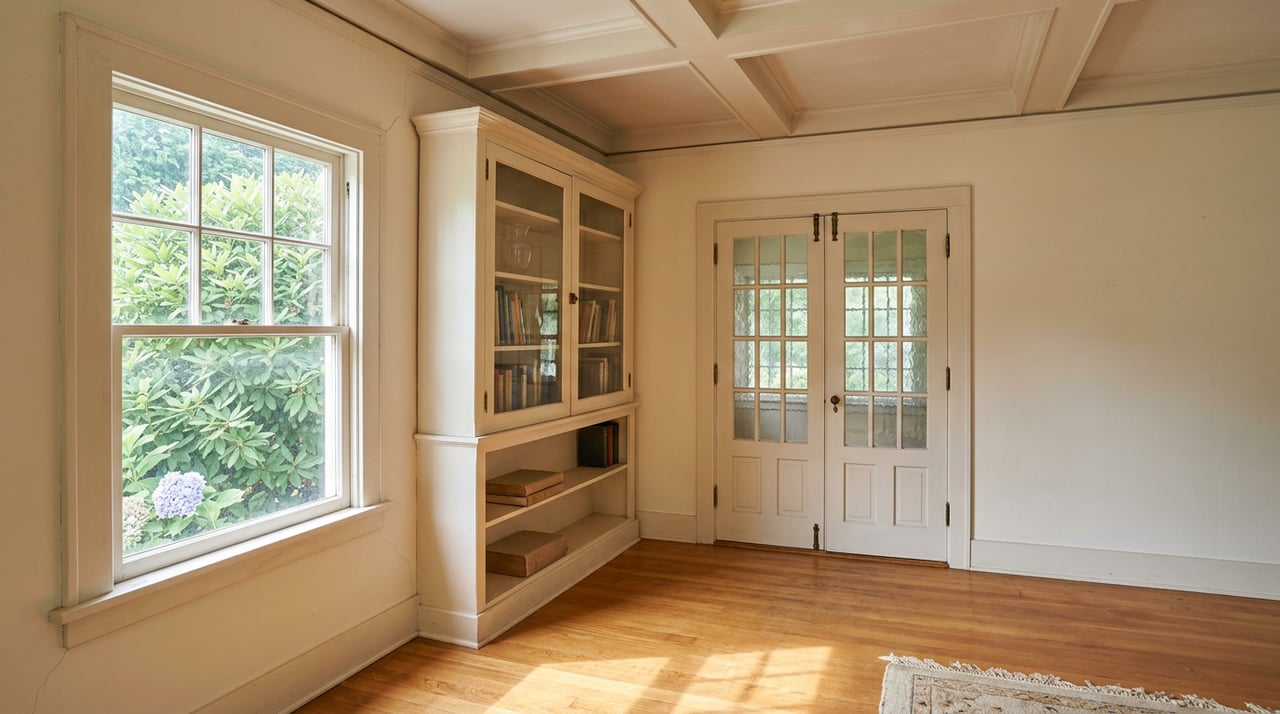
Consider the kind of listing that moves through this segment. One recent example on the market was a 1922 craftsman bungalow, just under 1,900 square feet, hitting the market for the first time in over 60 years. Original clear vertical grain Douglas fir rafters, box beam ceilings, leaded glass doors between the living and dining rooms. Homes like that do not have five comparable sales from the last six months sitting nearby. They have almost none. When something that rare finally sells, it can single-handedly reset what the "median" looks like for the whole quarter, whether or not the rest of the neighborhood's values actually moved.
This is the part that gets lost when a big percentage gets repeated without context. A 147 percent jump sounds like a market on fire. In a thin market, it can just as easily mean one unusual sale closed.
Snohomish is not one housing market. It is three, and they price on almost entirely different logic.
| Segment | What actually drives price | Typical inventory pattern |
|---|---|---|
| Historic District (First Street core and surrounding blocks) | Condition, provenance, restoration quality, architectural detail | Rarely lists, low sales volume, no builder can replicate supply |
| Conventional Snohomish (hillside developments, Bickford corridor) | Standard comps: square footage, lot size, school assignment, age of systems | Where most of the city's actual transaction volume happens, competes directly with Lake Stevens and Monroe |
| Valley acreage belt (hobby farms, equestrian and view parcels east and south of town) | Land, water rights, outbuildings, usability | Thin, specialized buyer pool that shops regionally rather than by city |
If you are cross-shopping these three segments, you are not comparing apples to apples even though every listing says "Snohomish" at the top. A newer four-bedroom home on the hills above downtown, in the Snohomish School District and not requiring a restoration project, prices almost entirely on the same logic as a comparable home in Lake Stevens or Monroe. A five-acre parcel with a barn and a view of the valley prices on land and usability, and its buyer pool is not even limiting the search to city limits. Only the historic district prices the way it does, on scarcity and character that cannot be replicated on a builder's spec sheet.
If you are shopping the historic district specifically, the practical takeaway is this: do not anchor your offer, or your expectations as a seller, on the quarterly median. Anchor on the individual home.
A few things carry real weight in this segment that would barely register in a newer subdivision:
None of this shows up cleanly in a median sale price. It shows up when you walk the property with someone who has seen enough of these homes to know which details are cosmetic and which ones are structural.
As John L. Scott's chairman put it in a mid-2026 housing update, the biggest opportunity in today's market is its predictability, for buyers and sellers who understand the fundamentals rather than chasing headline numbers. In a market this small and this specific, that predictability comes from knowing the property, not the percentage.
Does this mean historic district homes really appreciated 147 percent this year? Not in the way that number implies for any individual home. It reflects a small number of sales, some of them for rare, highly distinctive properties, moving the median for that quarter. It is not evidence that a typical historic-district home is now worth 60 percent more than a comparable home elsewhere in Snohomish.
How is a historic home priced differently than a newer home nearby? A newer home on the hills above downtown prices mostly on standard comps: square footage, lot size, condition, school assignment. A historic home prices on scarcity and specifics: restoration quality, documented system updates, architectural integrity, and how well the character of the original structure has been preserved. Two homes with similar square footage in these two segments can land very far apart in value for reasons a standard comp sheet will not capture.
Is the acreage belt part of the same conversation? Only loosely. Those buyers are usually shopping for land, water access, and outbuildings rather than a specific neighborhood, and they compare properties regionally rather than against other Snohomish listings. It is worth knowing that segment exists so you do not mistake its pricing logic for the historic core's.
If you are trying to figure out what a specific historic-district property is actually worth, or how to position one for sale in a market this thin, a spreadsheet of citywide medians will not get you there. Wendy Bremer has spent more than 20 years in Snohomish and works these blocks closely enough to tell the difference between a house that photographs well and one that is genuinely well restored. If you are weighing a move into or out of the historic district, request a free home valuation and staging consultation and get a read on your specific property, not the quarter's headline number.
Stay up to date on the latest real estate trends.
As your trusted real estate professional, Wendy promises to be highly compassionate, collaborative, and reliable during one of life’s most stressful transactions. Work with Wendy today!