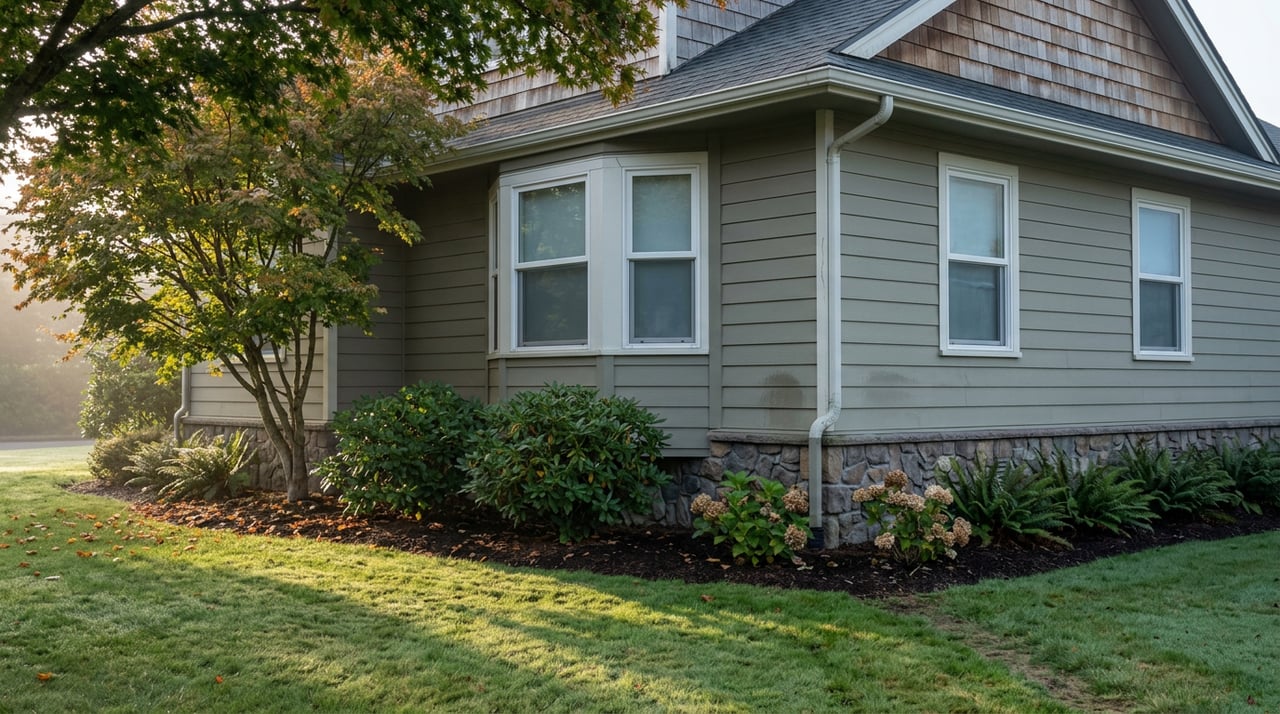
Lake Stevens Septic Inspection Timing for Home Sellers
August 13, 2026
August 13, 2026
"If you plan ahead, this requirement won't slow down a home sale."
That's Ragina Gray, director of the Environmental Health Division at the Snohomish County Health Department, describing the county's new septic inspection ordinance. It's a reassuring line, and it's also the whole story in one sentence. The rule itself is simple. The timing around it is where sellers either come out ahead or get caught flat-footed, and Lake Stevens has more homes exposed to that timing question than most people assume.
On April 14, 2026, the Snohomish County Board of Health adopted Ordinance BOH26-02, which requires a certified septic professional to inspect any on-site sewage system before the property it serves changes hands. If the inspection turns up problems, the tank has to be pumped and issues addressed or disclosed forward. The county's version of the rule takes effect November 1, 2026, which puts Snohomish ahead of a statewide requirement (WAC 246-272A-0270) that doesn't kick in everywhere until February 1, 2027. King, Skagit, and Island counties already require this kind of inspection, so Snohomish is catching up to its neighbors rather than inventing something new.
Here's how the calendar actually lines up:
| Date | What happens |
|---|---|
| April 14, 2026 | Snohomish County Board of Health adopts Ordinance BOH26-02 |
| November 1, 2026 | County's Report of Property Transfer requirement takes effect for home sales |
| February 1, 2027 | Statewide septic inspection rule becomes mandatory in every Washington county |
The program has a name: Report of Property Transfer. The fee is $245 through 2027, rising to $255 in 2027 and 2028. Inspections can be completed up to a year before closing, and a system installed within the past 12 months is exempt outright. That inspection window matters more than the fee does, and it's the part of this story most guides skip.
Snohomish County has roughly 84,000 private septic systems, and about 2,800 septic-served properties change hands every year, according to county Assessor records. A meaningful share of those are around Lake Stevens.
The lake's own sewer district exists because septic systems failed here first. The Lake Stevens Sewer District formed in 1957 after a study found that the hardpan soils around the lake made on-site sewage disposal ineffective, and raw sewage was reaching the water directly. The district built out its collection system in phases, with ULID 1 following the shoreline from the southern tip to the northwest shore in 1971 and ULID 3 covering the east side of the lake in 1980, which nearly closed the loop around the lake's perimeter.
Nearly closed is the operative phrase. Newer subdivisions near downtown Lake Stevens connect to that municipal system, but pockets further out, including Lochsloy, Cavalero, Machias, and some of the older lots ringing the lake itself, still run on septic. Those are exactly the properties this ordinance is written for, and they sit inside a watershed the county already tracks closely. Snohomish County's own Lake Health Report Card rates the lake's water quality as "Excellent" but its shoreline health as "Poor," with roughly 85 percent of shoreline vegetation replaced by lawn and more than 87 percent of the shoreline armored with bulkheads or rip rap, based on a 2022 survey. Septic systems are named as one of the phosphorus sources feeding the lake's algae cycle. For a buyer weighing a septic-served lot near the water, that context isn't background noise. It's part of what they're buying into.
Here's the mechanism that actually determines whether this ordinance is a footnote or a headache: the report is valid for 12 months, the county's review takes up to 10 days, and the inspection window opens a full year before closing.
Run that forward. A seller who gets inspected during pre-listing prep, say six months before they expect to close, has a report in hand before a buyer ever walks through the door. If the inspector finds something, there's time to fix it on the seller's schedule and at the seller's negotiating leverage, not the buyer's.
A seller who waits until they're under contract is working against a much tighter window. Washington closings commonly run 30 to 45 days. Layer a 10-day county review on top of that, and any deficiency the inspector flags either needs a fast repair or it gets disclosed forward to the buyer, unresolved, right as negotiations are at their most sensitive. The ordinance explicitly allows unresolved issues to carry to the buyer, which sounds like flexibility until you're the one explaining a failed drainfield during earnest money negotiations.
This is the actual cost of the new rule. It isn't the $245 fee. It's the difference between controlling your own timeline and reacting to someone else's.
The county has run a rebate program for years that fits neatly into this timing question. Through the Savvy Septic Program, homeowners who complete a free online Septic Care Workshop can apply for rebates covering:
The current program page puts the combined rebate cap at up to $500 per property, and between 2023 and 2025 the county issued nearly $223,860 across 1,922 claimed rebates, including 747 for inspections alone. Fifteen low-income households also received grants to replace failing systems entirely.
None of that offsets a full system failure. Replacing a drainfield or an entire septic system in western Washington can run well into five figures, and a failed inspection found mid-transaction has no good side to be on. But it does mean a seller who books their inspection now, before the November 1 rush, pays close to nothing out of pocket for the piece of paper that will eventually be required anyway, and does it on a timeline where a bad finding is a repair project instead of a closing crisis.
The ordinance is tied to closing, not to when a home hits the market. That creates a real, if quiet, incentive: a septic-served home that lists in August has a real shot at closing before November 1 and skipping the new requirement altogether, given typical Washington closing timelines. A home that lists in September or October is more likely to close after the deadline, which means the seller either needs an inspection already in hand or needs to build the 10-day review into their escrow calendar from day one.
Neither path is wrong. But only one of them is a plan. If you own a septic-served property near the lake and you're weighing a fall listing, the smart move is to treat the inspection as a pre-listing task, the same way you'd treat a pre-inspection walkthrough or a staging consultation, rather than as a box to check once you're already under contract.
Does this apply if my home is on city sewer? No. The Report of Property Transfer requirement is specific to properties with on-site septic systems. Homes connected to the Lake Stevens Sewer District's municipal system aren't affected.
I had a septic inspection last year. Am I covered? Reports are valid for 12 months. If your closing date falls outside that window, you'll need a new inspection regardless of when the last one happened.
Is this the same as routine septic maintenance? No. Washington already expects septic systems to be inspected roughly every three years as part of ordinary maintenance in most counties. The Report of Property Transfer is a separate, point-of-sale requirement layered on top of that existing schedule.
Who pays for it? The ordinance doesn't say. In practice, payment is something buyers and sellers work out in the purchase and sale agreement, and it's worth putting in writing early rather than assuming.
This ordinance rewards sellers who treat it as a scheduling decision and quietly penalizes anyone who treats it as paperwork to handle later. For Lake Stevens, where whole pockets of the market still sit outside the sewer district's reach, that timing question is worth working through before a listing goes live, not after an offer comes in.
If you're weighing a fall sale on a septic-served property, Wendy Bremer can walk through your specific timeline, what the inspection process looks like for your system, and how it fits into a broader listing strategy that includes complimentary staging and styling. Request a free home valuation and staging consultation to start that conversation before the calendar makes the decision for you.
Stay up to date on the latest real estate trends.



As your trusted real estate professional, Wendy promises to be highly compassionate, collaborative, and reliable during one of life’s most stressful transactions. Work with Wendy today!