How To Narrow Your Home Search In Lake Stevens
April 2, 2026
April 2, 2026
Trying to search for every home in Lake Stevens at once can get overwhelming fast. If you are balancing price, space, commute, and day-to-day convenience, it helps to know that Lake Stevens is not a one-size-fits-all market. The good news is that with the right filters and a simple plan, you can narrow your search with more confidence and less stress. Let’s dive in.
Before you focus on listings, start with your routine. Lake Stevens has grown quickly, with the U.S. Census Bureau estimating a population of 41,350 as of July 1, 2024, and that growth makes micro-location matter.
The city also has a mean travel time to work of 35.2 minutes, according to the same Census data. That means your daily drive, bus access, and errand pattern should be part of your home search from day one, not something you sort out later.
Start with a short list of must-haves. Keep it simple so you can make better decisions when new listings hit the market.
Your list might include:
When you know your non-negotiables, it becomes easier to say no to homes that look good online but do not really fit your life.
One of the smartest ways to narrow your home search in Lake Stevens is to compare smaller pockets of the city instead of treating the whole area the same. Community Transit describes Lake Stevens as about six miles east of Everett, with major commercial activity centered around downtown and Frontier Village.
The city also uses planning areas such as Lake Stevens Center, the 20th Street SE Corridor, Downtown Lake Stevens, and the Lake Stevens Industrial Center. Even if you are shopping by subdivision or neighborhood name, these reference points can help you compare access, traffic patterns, and future surroundings.
As you review listings, ask yourself what you want nearby. Some buyers want easier access to shopping and services, while others prefer a quieter residential setting farther from main corridors.
A home that looks similar on paper can feel very different depending on whether it is closer to downtown, near Frontier Village, or deeper inside a residential area. That is why location inside Lake Stevens often matters just as much as square footage.
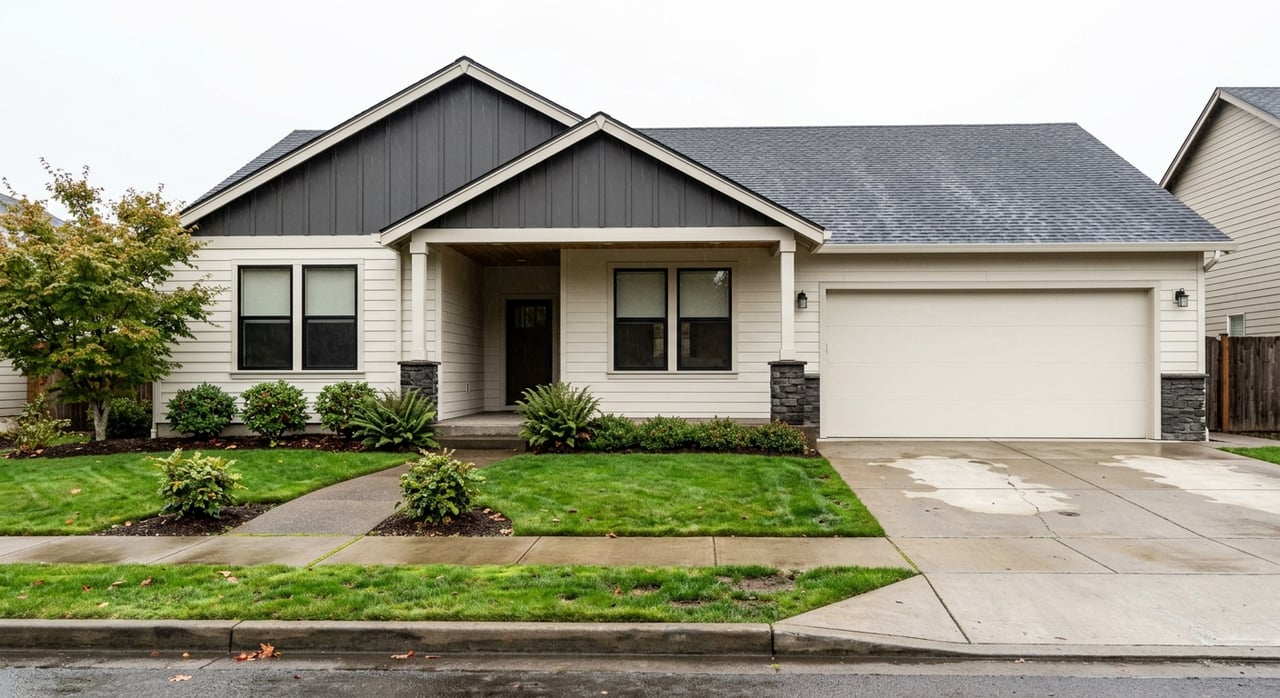
Lake Stevens is still primarily a detached-home market, but the housing mix is changing. According to the city’s comprehensive plan, detached single-family homes make up 81.2% of housing units, and 75.6% of homes are owner-occupied.
That tells you something important as a buyer. If you want a classic single-family home with a yard, you will likely have more options than if you are focused on attached housing, but newer attached choices are becoming more available.
The city’s housing stock reflects different development eras. Older areas often have larger lots, while many planned developments from the 1990s and early 2000s used lots around 4,000 to 6,000 square feet, according to the same city planning document.
That means two homes with the same bedroom count may offer very different outdoor space and privacy. If lot size matters to you, make that one of your first filters, not an afterthought.
Lake Stevens is gradually expanding its range of housing types. The city’s Housing Action Plan says early actions have supported duplexes, triplexes, townhomes, accessory dwelling units, and multifamily housing, and more than 400 multifamily units were completed between 2020 and 2022.
If you are open to townhomes or other attached housing, that can widen your options. It may also help if you want lower exterior maintenance or a different price point than a detached home in the same general area.
For many buyers, commute reliability can make or break a home choice in Lake Stevens. The key traffic pinch point is the SR 9 and SR 204 area, where WSDOT completed intersection improvements in July 2025, while also noting that the area still sees heavy congestion on weekdays and weekends.
That is why it helps to compare homes by more than price and finishes. A property near your preferred route can save you time and stress over the long run.
Lake Stevens has transit options that can be useful depending on where you work. Community Transit reports that the Lake Stevens Transit Center is served by four bus routes, with service including Route 903 to Lynnwood City Center on weekday peak periods, Route 280 to Everett Station, and Route 209 connecting Smokey Point Transit Center and Lake Stevens Transit Center.
Community Transit also offers Zip Shuttle in Lake Stevens seven days a week from 5 a.m. to 10 p.m. within the service area. If you commute to Everett, Lynnwood, or another regional hub, access to the transit center and major arterials should be part of your search criteria.
It is easy to waste time if every listing alerts you at once. A better approach is to organize your search in layers.
Try this three-part filter system:
This method helps you act quickly on the right homes without getting distracted by properties that were never a strong fit.
Online searching can only tell you so much. In a city like Lake Stevens, where access and development patterns vary from one pocket to the next, seeing the area for yourself is one of the best ways to narrow your list.
The city recommends tools that make this easier. The Lake Stevens GIS portal includes a comprehensive GIS app, property ownership layers, map amendments, and a schools and elementary boundary map, while Community Transit’s maps and schedules tools let you check routes and real-time bus locations.
A practical way to compare areas is to test your likely routine before you buy. The city’s planning context supports a simple drive-and-compare approach focused on downtown, Frontier Village, and the main planning areas.
Use this checklist:
This kind of fieldwork can quickly rule in or rule out areas that looked similar online.
A smart home search is not just about what a street feels like today. It is also about understanding where Lake Stevens may continue to evolve.
The city’s planning documents point to continued redevelopment and infill in areas such as downtown and Lake Stevens Center, including mixed-use buildings with residences above ground-floor businesses in the downtown core. If future surroundings matter to you, this is worth discussing as you compare one micro-area to another.
As you narrow your search, ask questions like:
Those questions can help you move past surface-level features and focus on long-term fit.
The most helpful mindset is to stop searching for the perfect house everywhere in Lake Stevens and start searching for the right home in the right part of Lake Stevens. This city offers a mostly detached-home market, a growing mix of attached housing, and real differences in commute patterns, lot sizes, and development character depending on where you look.
If you want a clear plan for narrowing your options, Wendy Bremer can help you compare Lake Stevens micro-locations, organize your search priorities, and move forward with a calm, methodical approach.
Stay up to date on the latest real estate trends.
As your trusted real estate professional, Wendy promises to be highly compassionate, collaborative, and reliable during one of life’s most stressful transactions. Work with Wendy today!